

1. Selection parameters
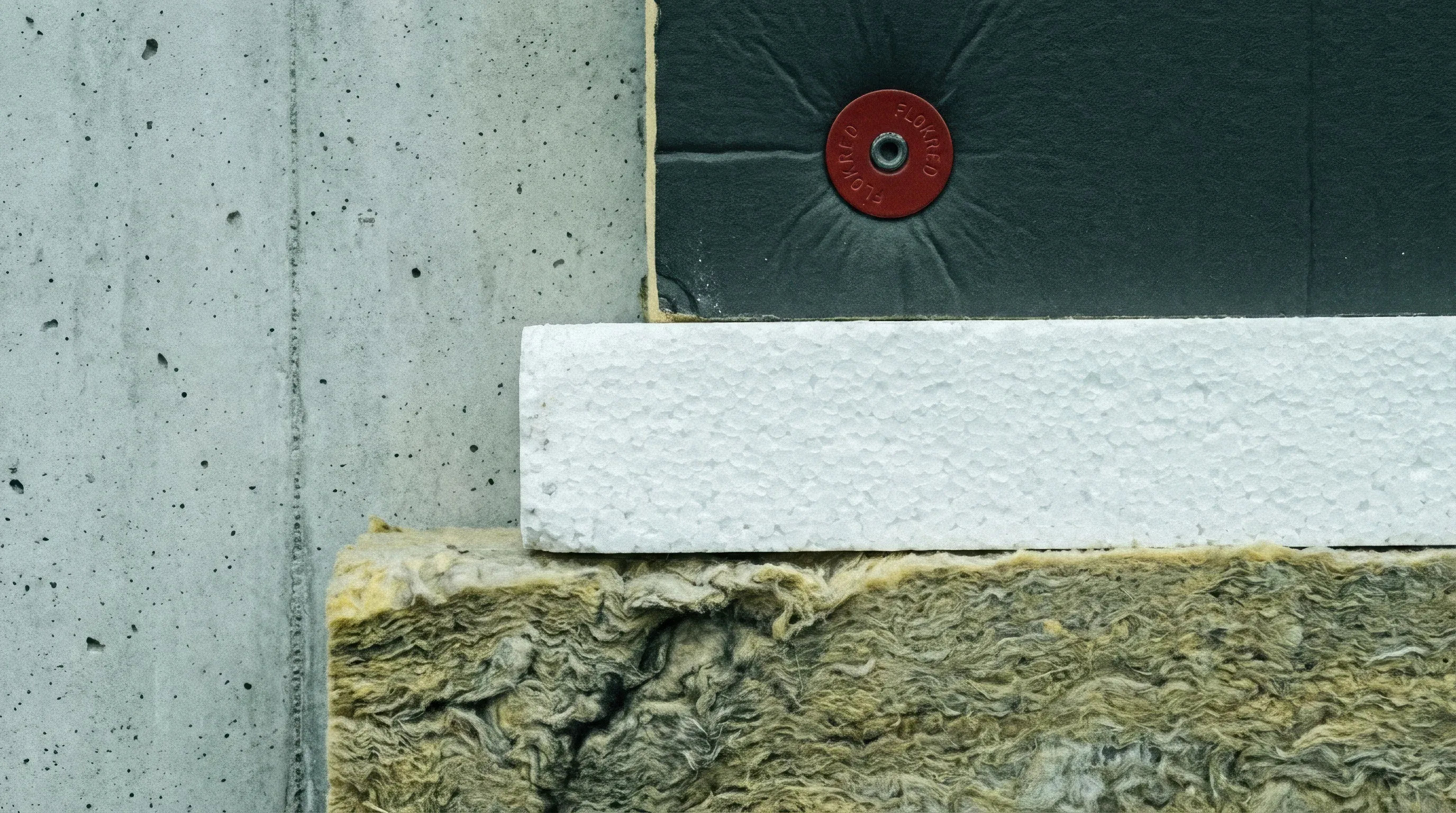
Four figures on the packaging: thermal conductivity (λ, W/m·K), combustibility (G1–G4 or non-combustible), vapour permeability (mg/m·h·Pa), density (kg/m³). The price is tied to λ — the lower it is, the more expensive a board of the same thickness.
2. Mineral wool
λ = 0.034–0.040, non-combustible, vapour-permeable. The baseline material for facades with wet plaster and ventilated curtain-wall systems. The catch — mandatory protection against getting wet: wet mineral wool loses up to 60% of its thermal resistance.
3. Expanded polystyrene (EPS)
λ = 0.036–0.041, combustible (G3), vapour-tight. 30–40% cheaper than mineral wool. Permissible for a plaster facade up to 15 m high, provided mineral-wool fire breaks are installed floor by floor. For residential buildings above 15 m it is prohibited by the codes.
4. PIR (polyisocyanurate)
λ = 0.022–0.025, G1–G2, vapour-tight. The most efficient material — an 80 mm PIR board ≈ a 130 mm mineral-wool board in thermal resistance. The price is 2.5–3 times that of mineral wool. It is used where the structure’s thickness is critical: facade sandwich panels, low-slope roofs.
5. When to choose which
- Multi-storey residential, wet facade: 100 mm mineral wool is the standard.
- Low-rise, wet facade: 100 mm EPS — savings without loss of quality.
- Industrial building with a tight installation schedule: PIR as part of a sandwich panel.
- A cold attic or a roof with a thin structure: 60–80 mm PIR.
Calculating consumption? Open the insulation calculator on the website — you will get a specification right away, with an allowance for trimming.